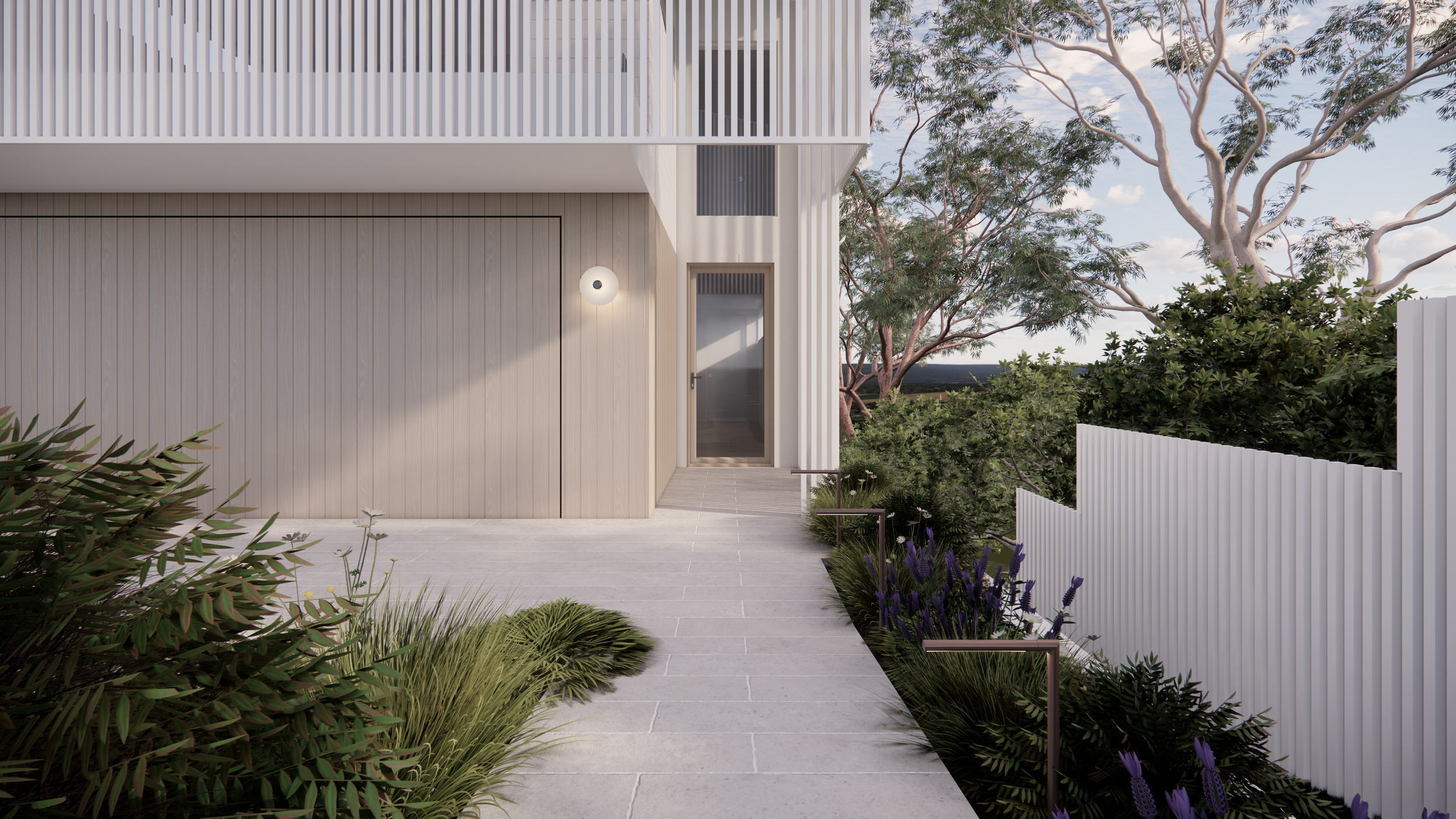
Custom Passive Home Building Designers Brisbane
Let H4 assist with your new passive home in Brisbane
Embark on your dream passive home in Brisbane
Brisbane building design that starts with your site, your brief, and how you actually want to live.
We’re a building design practice specialising in custom homes and Passivhaus design across Brisbane and Southeast Queensland. Brisbane is changing fast infill development, narrow lots, knockdown rebuilds in established suburbs, dual occupancy on blocks that once held a single Queenslander. We design homes that make the most of all of it, without losing sight of what makes Brisbane worth building in.
Custom Home Design in Brisbane
Brisbane has changed dramatically as a city, but the way most homes get designed here hasn’t kept pace. Volume builders still dominate the market, offering plans that could have been built anywhere in Australia with little regard for orientation, for the Queensland climate, or for the specific character of the suburb they’re landing in.
We take a different approach. Every project starts with a serious reading of the site: which way it faces, how the prevailing breezes move, where the neighbours are, what the streetscape is doing, and what the block is actually capable of. Then we design a home around that and around the people who are going to live in it.
That might be a new build in Paddington that picks up the character of the surrounding Queenslanders without pretending to be one, a contemporary family home in Kenmore that’s designed for Brisbane summers rather than despite them, a dual occupancy in Chermside that makes the most of a standard suburban lot, or a split level home in The Gap where the slope is an asset rather than a problem. Whatever the project, the process is the same: understand the site, understand the brief, and design something that couldn’t have come from a catalogue.
Passivhaus Design — Brisbane
Brisbane summers are long and they’re getting hotter. Most homes in Brisbane deal with this by running air conditioning from October through to April which works, but at significant cost, and only while the system is running. Turn it off and the house heats up within the hour.
Passivhaus design addresses the problem at the source. By building a highly insulated, airtight envelope with careful control of solar gain and continuous mechanical ventilation, a Passivhaus home stays cool in summer and comfortable in winter through the performance of the building itself.
In Brisbane’s mixed climate hot humid summers, mild winters Passivhaus design requires specific expertise. The strategies that work in a cool European climate need to be adapted for a Queensland context: solar shading becomes as important as insulation, cross-ventilation strategies need to work alongside airtight construction, and the building envelope needs to be calibrated for a climate zone that swings between extremes. This is work we’ve done, and we know how to get it right.
Our Brisbane Passivhaus homes are designed around:
• High-performance insulated envelopes specified for Queensland’s climate zone 2
• Solar control glazing and external shading that manages heat gain without blocking light or views
• Airtight construction with heat recovery ventilation delivering continuous fresh, filtered air
• Thermal bridge-free detailing that eliminates the weak spots that undermine most builds
We can design to full certified Passivhaus standard, or apply passive house principles selectively depending on the project scope and budget. Either way, the result is a home that performs significantly better than a standard Brisbane build cheaper to run, more comfortable to live in, and better positioned as energy costs continue to climb.
Knockdown Rebuild — Brisbane
Brisbane’s inner and middle ring suburbs are full of post-war housing on genuinely excellent blocks big lots, established trees, good access to schools and transport, proximity to the river or the city. Many of these homes have been extended and renovated to the point where starting fresh makes more sense than continuing to work around them.
A knockdown rebuild lets you keep the location and lose the constraints. You’re not retrofitting around someone else’s floor plan or working within the structural limitations of a 1960s brick veneer. You’re starting with a clear site and a brief that’s entirely yours.
We manage the full process: site assessment, Brisbane City Council development approval, demolition coordination, and complete design documentation through to construction. We’re experienced with Brisbane’s character overlay areas, flood planning designations, traditional building character overlays, and the specific requirements that apply across different parts of the LGA. If your block comes with planning complexity, we’ll work through it with you before the design goes anywhere not after.
Narrow Lot Homes
Brisbane’s infill boom has made narrow lot design one of the most in-demand skills in residential architecture. Subdivision of larger suburban blocks, dual street frontage sites, and legacy lots in the inner suburbs have all created a significant pool of sites where the frontage is tight and the design has to work hard to compensate.
Designing well on a narrow lot in Brisbane means understanding how to get northern light into a house that can’t spread east-west, how to create privacy from neighbouring homes that are close, how to sequence spaces so a constrained footprint feels open rather than compressed, and how to satisfy Brisbane City Council’s setback, height, and site cover requirements without losing usable floor area.
We design narrow lot homes that feel like genuine homes not compromises. Homes where the constraints drove the design somewhere more interesting than a standard suburban floor plan ever would have.
Dual Occupancy Design
Dual occupancy is increasingly the smart play for Brisbane landowners driven by high land values, strong rental demand, and Brisbane City Council’s growing support for secondary dwellings and dual occupancy development in residential zones.
We design dual occupancy homes where both dwellings are genuinely liveable. Not a main house with a granny flat tacked on two considered residences that happen to share a title. That means thinking carefully about how the two homes relate to each other, how privacy and acoustic separation work between them, how each gets adequate light and outdoor space, and how the overall project sits within the streetscape.
We run the planning feasibility with you at the outset lot size, zoning, BCC code requirements so the design is based on what’s actually approvable before you’ve committed significant time or money to it.
Split Level Homes
Brisbane’s terrain is more varied than people give it credit for. The western suburbs The Gap, Pullenvale, Brookfield, Kenmore have significant fall. The northern and southern hinterland fringe has steeper country still. Even within the inner suburbs, there are plenty of blocks where the topography is the defining characteristic of the site.
A split level response is usually the right answer to a sloping Brisbane block. Rather than cutting and filling to create a flat platform expensive, disruptive, and wasteful of what the site is offering we design homes that step with the land. The level changes create natural separation between living zones, improve cross-ventilation by stacking spaces vertically, and often deliver outlooks that a flat-site home sitting at ground level could never achieve.
We’ve designed split level homes across Brisbane’s western and northern corridors, and across acreage sites beyond the urban fringe where fall and views are the main event.
Why Work With a Local Brisbane Building Designer?
Brisbane City Council’s planning scheme is one of the most detailed local government planning instruments in Australia. The character overlays, flood and waterway corridors, traditional building character overlay areas, neighbourhood plan provisions, and the specific requirements for dual occupancy, secondary dwellings, and infill development all create a planning environment that rewards local knowledge.
We know Brisbane’s planning scheme. We know which design moves will clear the assessment process smoothly and which ones need a carefully constructed planning argument. We know where the opportunities are within the controls and where the hard limits sit. That knowledge doesn’t just save time it shapes better design, because a design that’s genuinely informed by its planning context is more resolved than one that discovers its constraints halfway through.
We also bring Passivhaus expertise that most Brisbane building designers don’t have which means high performance design is integrated from the first sketch, not bolted on at the end.
How We Work
1. Site & Brief
We start with your block and your brief. Site assessment covers orientation, planning overlays, constraints and opportunities. The brief conversation covers how you live, what you need, and what the project has to achieve.
2. Concept Design
We develop design options that respond directly to the site and the brief. You’ll see real ideas with enough resolution to understand what each one means spatial relationships, outlook, how the house sits on the land.
3. Design Development
Once the concept is confirmed we develop it fully: materials, detailing, structural coordination, energy performance strategy. Nothing ambiguous gets left to the builder to resolve on site.
4. Documentation & Approval
We prepare the complete drawing set and documentation for Brisbane City Council approval. We coordinate with structural engineers, energy assessors, town planners, and other consultants as required, and manage the lodgement on your behalf.
5. Construction
We can remain involved through the build reviewing shop drawings, conducting site inspections, and making sure what gets constructed matches what was designed.
If you’re thinking about building a custom home in Brisbane — a Passivhaus, a knockdown rebuild, a narrow lot home, a dual occupancy, or a split level on a sloping block — we’d like to hear about it.
Get in touch for an initial conversation. We’ll talk through your site, your brief, and whether we’re the right fit. No obligation, no sales pitch.